Of what avail are forty freedoms without a blank spot on the map? —Aldo Leopold
n the map Wells Gray Provincial Park is a large green blank spot centred on the Clearwater Valley of east-central British Columbia. On the ground, at 540,000 ha, it is a magnificent wilderness preserve – as large as, or larger than, one in every five nations on earth.

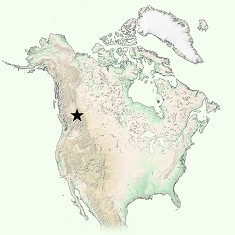
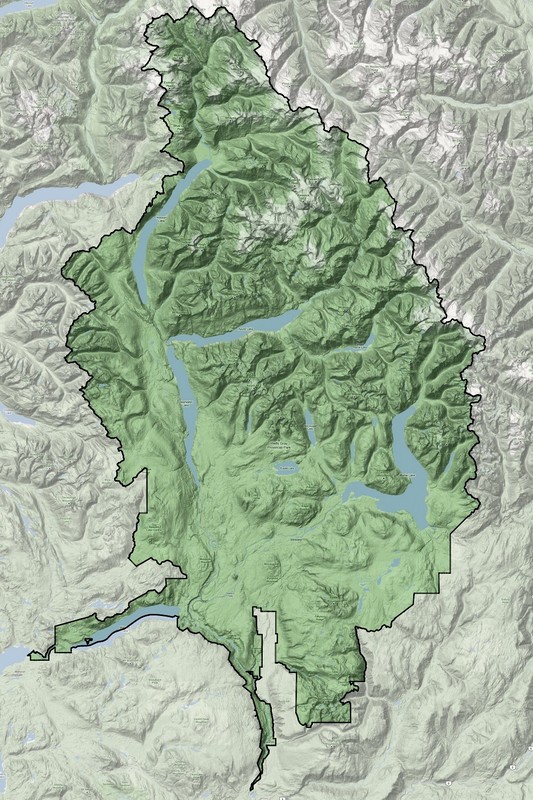
For sheer conservation value, Wells Gray is as good as it gets at temperate latitudes. Not only are its boundaries coincident with the watersheds of three major rivers – the Murtle River, the Azure River and the Clearwater River – they also encompass tremendous biological and geological diversity.
East and north, Wells Gray bristles with unnamed peaks interrupted here and there by deep fjord-like valleys, each with its long narrow lake. South and west, the terrain is gentler, more hospitable, with expansive flower-strewn highlands that top out in rounded alpine summits and give way below to the flat-bottomed lap of the Clearwater Valley itself.
Periodic volcanic outpourings over the past few million years have transformed this portion of the Clearwater Valley into a potpourri of volcanic features including basaltic plateaus, lava flows, cinder cones, under-glacier volcanoes and, in one case, a curious underwater volcano.
This “portal on the park” is designed for visitors who wish to learn about the wild living things – eagles, ancient trees, grizzlies, mountain caribou – that find safe haven here. To help get you started, here are some popular magazine articles from some years back: Valley of Fire & Ice; Burning Questions; Winter of Wells Gray. You also might want to check the side bars at right, which provide a thumbnail introduction to the park’s natural history.
The staff at the Wells Gray Info Centre in Clearwater will be happy to answer any further questions or help you plan a visit. You can contact them at info@wellsgray.ca.
Next up: Weathering Wells Gray